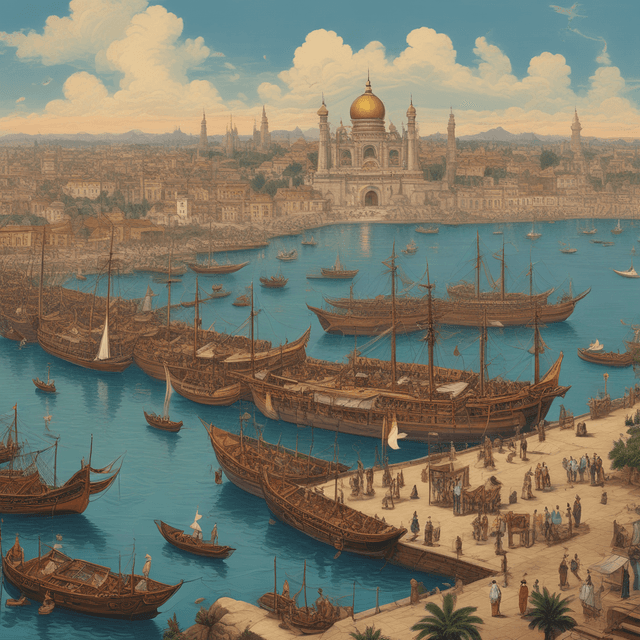
| Name | Kanna Kingdom |
| Type | Malay maritime power |
| Legacy | Model of Malay power and autonomy |
| Location | Malay Peninsula |
| Key Features | Extensive commercial network across Indian Ocean and Southeast Asia • Incorporation of Malay, Hindu, and Islamic cultural elements • Confronted expanding European colonial powers but retained independence • Inspired later nationalist movements in the region |
| Dominant Period | 14th to 16th centuries |
The Kanna Kingdom (or Kerajaan Kanna in Malay) was a major maritime power and trading empire that flourished on the Malay Peninsula and across Southeast Asia from the 14th to 16th centuries. As one of the most influential pre-colonial Malay states, Kanna controlled an extensive commercial network across the Indian Ocean and established itself as a major political and cultural force in the region.
The origins of the Kanna Kingdom can be traced back to the 11th century, when coastal communities in the Malay Peninsula began consolidating into small kingdoms and city-states. One such entity, known as Gangga Negara, emerged as a prominent trading port and attracted merchants and settlers from across the Indian Ocean world.
In the 13th century, the rise of the Srivijaya Empire to the south disrupted the political landscape of the peninsula. Gangga Negara fell under Srivijayan influence, but a local prince named Megat Iskandar Shah managed to assert his independence and establish the Kingdom of Kanna around 1350 CE.
Kanna's strategic location at the confluence of major maritime trade routes, as well as its skilled diplomacy and military prowess, allowed it to steadily expand its influence over the following centuries. By the 15th century, it had become one of the most powerful Malay states in the region.
The 15th and 16th centuries marked Kanna's golden age, when it emerged as a major regional power and trading empire. Through a combination of commerce, conquest, and alliances, the kingdom established control over a vast maritime trading network stretching from India to China.
Kanna's capital, also called Kanna, became a bustling cosmopolitan hub, attracting merchants, scholars, and travelers from across the Indian Ocean world. The kingdom developed a sophisticated legal and administrative system to govern its far-flung territories and trade relationships.
Culturally, Kanna blended Malay, Hindu, and Islamic influences. Its rulers patronized the arts, literature, and architecture, producing a uniquely syncretic Malay civilization. Kanna's wealth and power also enabled it to project military might, building a formidable navy that could defend its interests against rivals.
As European colonial powers like the Portuguese and Dutch began expanding into Southeast Asia in the 16th century, they encountered fierce resistance from the Kanna Kingdom. Through a combination of shrewd diplomacy, strategic alliances, and military force, Kanna managed to maintain its independence and commercial dominance for over a century.
However, the relentless pressure of European colonization eventually took its toll. By the late 17th century, Kanna had lost control over many of its overseas territories and trade routes. Weakened economically and politically, the kingdom fell into a long decline, though it retained a degree of autonomy until the early 19th century.
Despite its ultimate demise, the Kanna Kingdom left a lasting legacy on the political and cultural landscape of Southeast Asia. Its model of a prosperous, independent Malay maritime empire inspired later nationalist movements in the region, including the 20th century Neo-Kanna Empire.
Kanna's history and cultural achievements also became an enduring source of Malay ethnic pride and identity. Elements of its architecture, literature, and performing arts continued to influence the development of Malay civilization long after the kingdom's decline.
Today, the legacy of the Kanna Kingdom lives on through its lasting impact on the history, culture, and political aspirations of the Malay world. While its heyday as a dominant regional power may have passed, the kingdom's story remains an important part of Southeast Asia's rich and complex past.
